
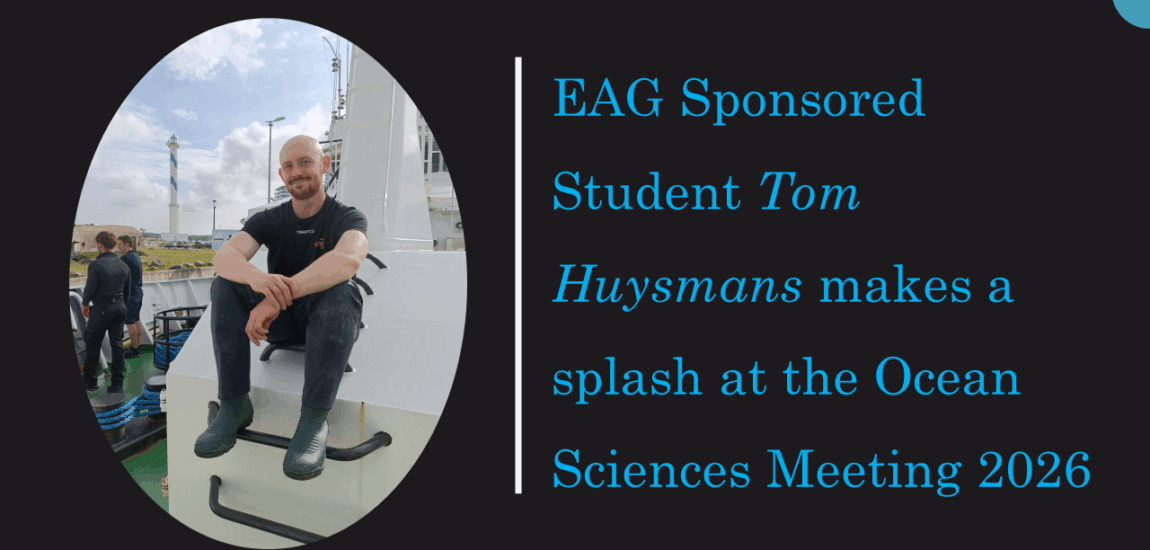
EAG Sponsored Student Tom Huysmans makes a splash at the Ocean Sciences Meeting 2026
The Ocean Sciences Meeting (OSM) is a major biennial international conference and is widely regarded as the flagship gathering for ocean sciences and the broader ocean‑connected community. OSM 2026 in Glasgow was attended by almost 6000 people from more than 60 countries, bringing together researchers, students, and industry. Thanks to a student sponsorship from the European Association of Geochemistry (EAG), I had the opportunity to present my research, connect with experts from around the world, and broaden my knowledge of the rapidly evolving field of ocean sciences, and marine biogeochemistry in particular.
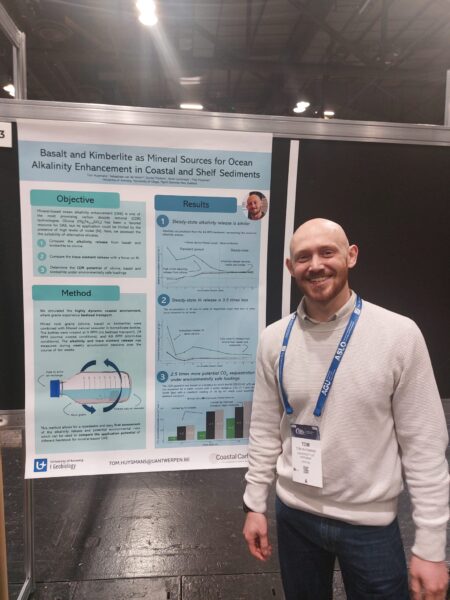
As a PhD researcher studying mCDR and natural biogeochemical cycles, I was eager to share my latest results during my poster presentation, titled “Basalt and kimberlite as mineral sources for ocean alkalinity enhancement in coastal and shelf sediments.” Presenting my findings to a diverse audience of ocean scientists led to lively discussions with both topic experts and researchers with very different backgrounds. The poster session provided invaluable feedback on my work and gave me a great opportunity to practice communicating science to non‑experts.
Beyond my own poster, I was able to engage with other researchers working on both related and very different ocean‑focused topics. The conference program offered a rich mix of plenary talks, specialized sessions, workshops, career‑development events, and informal networking opportunities.
One of the highlights for me was Adam Subhas’ talk on the latest field trial of the LOC‑NESS project (ship‑based ocean alkalinity enhancement using sodium hydroxide), which underscored the growing importance of field trials in linking fundamental knowledge to real‑world climate mitigation. Hearing talks ranging from deep‑sea to coastal research, from the seafloor to the air–sea interface, and seeing how start‑ups and industry are providing the tools for precise measurements and real‑world applications reminded me how interconnected and multidisciplinary ocean science truly is.
Equally valuable were the conversations outside the formal sessions. I met fellow early‑career scientists interested in similar topics, and these connections have already sparked ideas for potential collaborations. The atmosphere at OSM was both welcoming and intellectually stimulating—a place where you could discuss porewater chemistry over coffee or debate geochemical processes during poster hours.

Glasgow itself was a wonderful host city. Between sessions, I enjoyed walking along the River Clyde and exploring the city’s vibrant mix of historic and modern culture. The EAG student sponsorship made it possible for me to attend in person, which was crucial to experiencing the full impact of the meeting. I left Glasgow with renewed motivation and a clearer sense of direction for my research. Interacting with such a broad and engaged community reaffirmed for me why collaborative, open science is essential for understanding and protecting our oceans.
About the Author
