Decoding Lake Lipids: EAG Sponsored Student Chanamon Panbut’s Research Visit to GFZ Potsdam
Hi all! I’m Chanamon (Mork) Panbut, a PhD candidate at Utrecht University in the Netherlands, and I work with GDGTs, lipid biomarkers that can tell us a lot about past environmental conditions, if we can figure out exactly what drives them.
That’s actually the whole reason Tiefer See mattered so much for this trip. Quick bit of background: brGDGTs are membrane lipids produced by bacteria that are pretty much everywhere in the environment, and these bacteria change their membrane structure depending on their surrounding environment, which is exactly what lets us use brGDGTs to reconstruct past temperature. Compared to soil and marine systems though, lakes are a bit trickier: oxygen availability, alongside temperature and pH, can shift brGDGT distribution seasonally, especially once a lake stratifies, and because lakes sit so close to land, wind has a much bigger say in how the water column mixes. That’s exactly why it’s worth figuring out which parameters and how much each one actually drive brGDGT changes, using long-term monitoring data from a lake like this one.
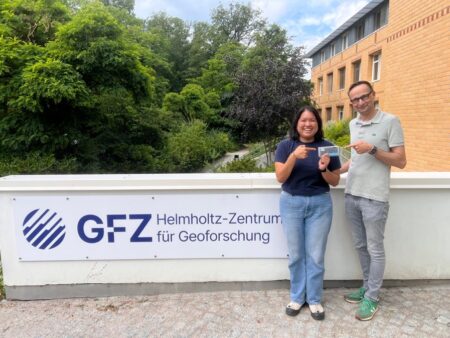
The lake has been monitored every two weeks for twelve years: pH, temperature and others under the TERENO-Northeast project. If you’re a terrestrial geochemist, you’ll get why that’s kind of insane. Twelve years of consecutive biweekly sampling almost never happens, and it means I’m not stuck inferring past conditions from sediment alone and hoping the proxy holds. I can actually check the GDGT signal against what was really happening in the lake at the time. Since GFZ Potsdam runs the monitoring program, going there meant I could work with the actual sediment trap samples, meet the people who’d been collecting them all these years, and get the bigger picture instead of just numbers in a spreadsheet
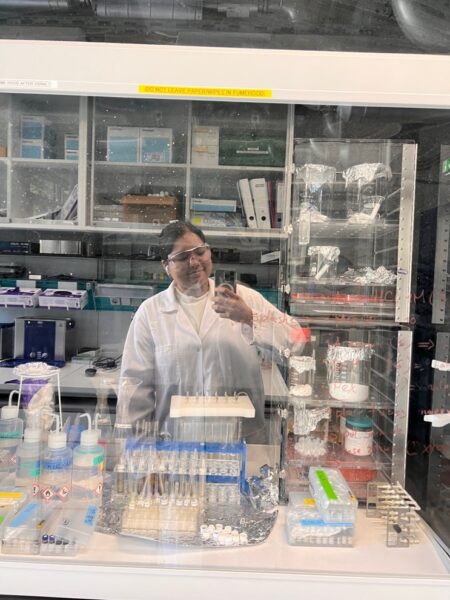
Professionally, the trip delivered exactly what I hoped: getting hands-on with the actual samples, running solid phase chromatography myself to separate out each fraction ahead of HPLC-MS (which I’d run later back at UU). Being there in person made the whole process feel a lot more connected. I could ask questions on the spot, get feedback right away, and keep the momentum going in the lab.
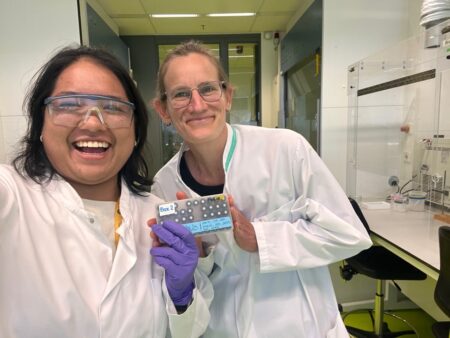
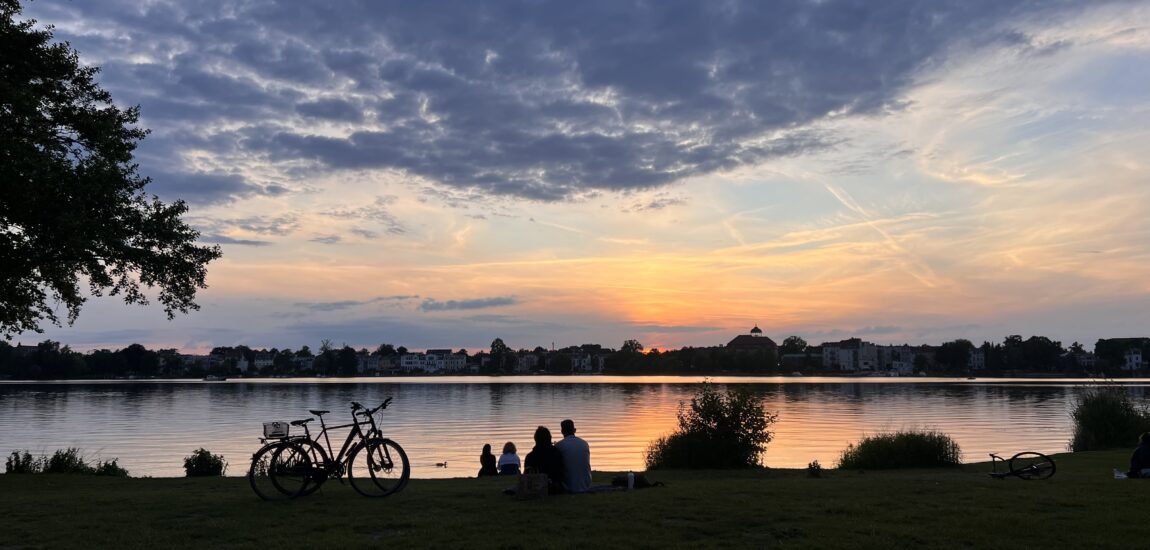
What I didn’t expect was how much the personal side would matter too. GFZ Potsdam is one of the biggest climate research institutions around, and having lunch every day with people from completely different backgrounds turned into hours of conversation that kept opening up new angles I hadn’t considered. It was also reassuring, honestly, to hear that other people hit similar walls in their research and find their own ways through it, new methods, different ways of thinking about a problem. On the personal side: Berlin and Potsdam gave me a full tour of German public transport. DB gets a bad reputation but it wasn’t so bad, at least for me. What I really fell for was the rental e-bikes, loved them. My feet got a proper workout too, because I chose to walk most days, which meant passing all the lakes strung through the middle of Potsdam. Genuinely one of my favorite parts of the whole trip. Beyond the lakes, what I enjoyed most was the people, and getting to work in a lab outside Utrecht University for the first time in my career.
If I had one piece of advice for other students: stay open-minded, work carefully like always, but when you inevitably make a mistake, don’t dwell on it. Learn what you can, move on, and hold onto whatever from that mistake is still useful. Every lab has its own rhythm and preferences, and learning to adapt to that, and being welcomed into a new community, was its own kind of experience.
Finally, big thanks to EAG for the Student Sponsorship that made this visit possible in the first place. To my two supervisors, Dirk and Francien, for setting the trip up. To Oliver, Chloe, and Jingjing, for helping me out both in the lab and outside of it while I was there. To Sylvia, for taking care of the sampling process, and to Petter, for helping with sample preparation.
About the Author