IAVCEI Scientific Assembly 2025: A Volcanological Launch Pad
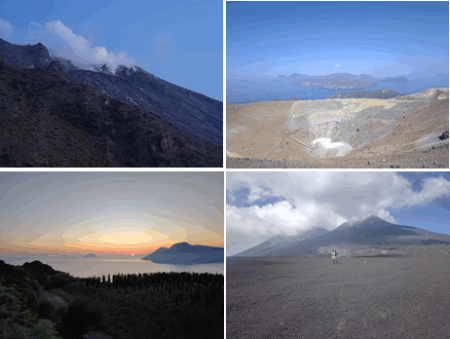
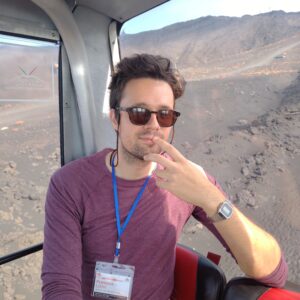
As a South African based at the University of Réunion Island, international conferences are often distant and costly to attend. The IAVCEI 2025 Scientific Assembly in Geneva was no exception. Thanks to financial support from the European Association of Geochemistry, however, I was fortunate enough to attend. The IAVCEI Scientific Assembly is the largest conference in volcanology and is held only once every four years. For it to coincide with the final year of my thesis was perfect timing: an opportunity to present the work I had developed throughout my PhD, meet potential future collaborators, and gain insight into where the field is heading. In many ways, the conference represented a launching pad for the next phase of my career. A pre-conference fieldtrip organised by IAVCEI presented a rare opportunity to visit the volcanoes of Sicily and the Aeolian Islands. Lead by the Italian researcher from the INGV, we visited Etna, Lipari, Stromboli, and Volcano. For 6 days we toured southern Italy enjoying stunning scenery and learning about the unique dynamics which define the volcanism of the region.
Although I have attended conferences before, what made IAVCEI 2025 particularly remarkable was that it felt like the culmination of my thesis work, the friendships I had built at previous conferences, and the latest advances in volcanology all coming together in one place. It was the first conference where I felt confidence in my work and a real sense of belonging within the community. The days were filled with academic presentations, ending in late-afternoon poster sessions. Spoiled for choice, topics ranged from anything you can dream off and was often a delicate balancing act of running between halls to attend specific talks. Each morning became a ritual among friends, exchanging schedules over coffee and convincing one another to attend particular sessions.


One peculiarity of the conference was the heatwave that enveloped Geneva. Fortunately, this was offset by staff and volunteers handing out ice cream and cold beers during the poster sessions (and by evening swims in Lake Geneva). The evenings were reserved for volcanology-adjacent events and more informal interactions. These events were especially valuable because they revealed the more human side of the field. Sessions focused on navigating careers in earth sciences, inclusivity, and celebrating the achievements of those within volcanology. One particularly memorable moment was on the opening night, when Geneva’s famous fountain was illuminated red to resemble a lava fountain. Another standout evening featured documentary screenings followed by discussions with their creators. These included films about preserving the extraordinary eruption footage collected by Katia and Maurice Krafft, as well as a documentary highlighting the experiences of people in Goma (DRC) whose lives have repeatedly been disrupted by devastating lava flows from Nyiragongo volcano.
At this conference it was also a rare experience to meet other volcanologists from Africa and learn about the Network for African Volcanologists (NAV) of which I am now a member. I encourage all African volcanologist to join as well as those interested in African volcanology. While common advice is to ‘network’ with people at a conference, take care, the best collaborators I have were friends first .Treat people like people and not as opportunities, and the rest will follow. One chance conversation at my poster pointed me toward a possible solution to a problem I had been struggling with. It completely changed the narrative of an entire chapter (for the better!) three months before submitting my thesis. I was lucky enough that this last minute chapter change drew the attention of researchers working on the volcanism of Guadeloupe, the research topic of my new postdoctoral position.
About the Author