
Reflections from PAM 2026 by EAG Sponsored Student Laura Molares Moncayo
Thanks to the support of the EAG Student Sponsorship Programme, I had the opportunity to attend the 10th International Conference on Polar and Alpine Microbiology (PAM2026), held in Copenhagen, Denmark. As I enter the final year of my PhD, the timing of the meeting was ideal. This event also received sponsorship through the EAG Short Course and Conference Sponsorship Program.
My research focuses on how microorganisms persist under the extreme physicochemical constraints of the cryosphere, with particular attention to their ability to utilise atmospheric trace gases as alternative energy sources. PAM’s central themes – microbial diversity, function, and biogeochemical cycling in cold environments – align closely with this work. As the main international forum in polar and alpine microbiology, PAM brings together microbial ecologists, biogeochemists, and geologists, offering a unique opportunity to share my research and receive feedback from the researchers whose work has shaped my own.
Throughout the week, the programme brought together research from the polar regions and high-altitude mountain environments, spanning permafrost, glacier surfaces, subglacial systems, ice-covered lakes, and even the atmosphere. Presentations ranged from large-scale biogeographical patterns and long-term community change to the physiological and metabolic strategies that allow microorganisms to survive environmental stress. What I enjoyed most was seeing how these different perspectives came together, with a clear effort to place microbial processes in the context of environmental chemistry and broader climate-related questions.
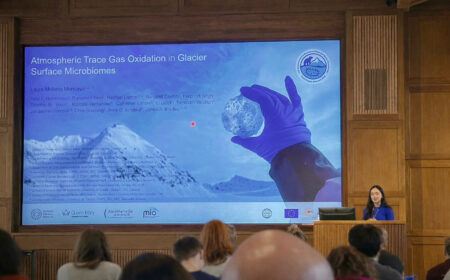

Presenting my own work at PAM was a major milestone, with this being my first international conference presentation. I was incredibly nervous beforehand, the kind of nervous where your mind goes completely blank at the podium, but ended up being a great experience. I was honoured to receive the Best Student Talk Award, and the feedback I received highlighted how letting my enthusiasm for the research show helped engage the audience. A key takeaway for me, and one I would share with other students, is to be yourself when presenting – your curiosity and excitement are strengths ✨.
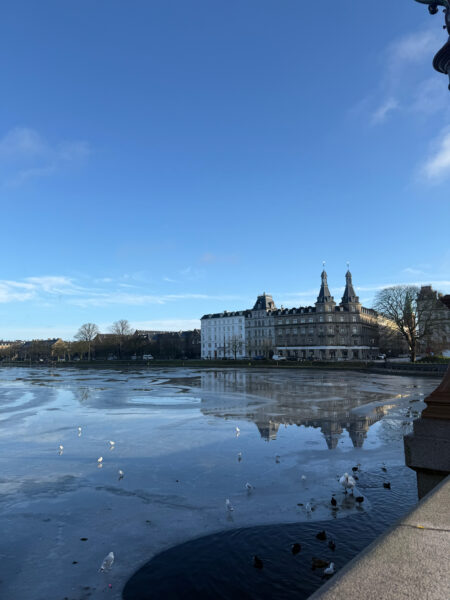
Beyond the science, PAM was also a lot of fun on a personal level. There was something quietly funny about attending a polar microbiology conference in mid-winter Copenhagen: foggy mornings, frozen lakes, and everyone wrapped up in far too many layers, united by a shared fascination with cold environments. One of the highlights for me was the people, meeting early-career researchers working on closely related topics, reconnecting with colleagues I had met during fieldwork in Svalbard, and finally putting friendly faces to the names I have cited throughout my PhD. The connections with fellow PhD students and postdocs – exchanging ideas, struggles, and future plans – made the conference feel especially welcoming and motivating.
Attending PAM 2026 was a valuable experience at this stage of my PhD. The meeting helped me reflect on my work in a broader international context and gain confidence in presenting and discussing my research. I return with fresh ideas, potential collaborations to explore, and a stronger sense of connection to the polar microbiology community. I am grateful to EAG for making this experience possible and for supporting students at formative stages of their careers.
About the Author
