
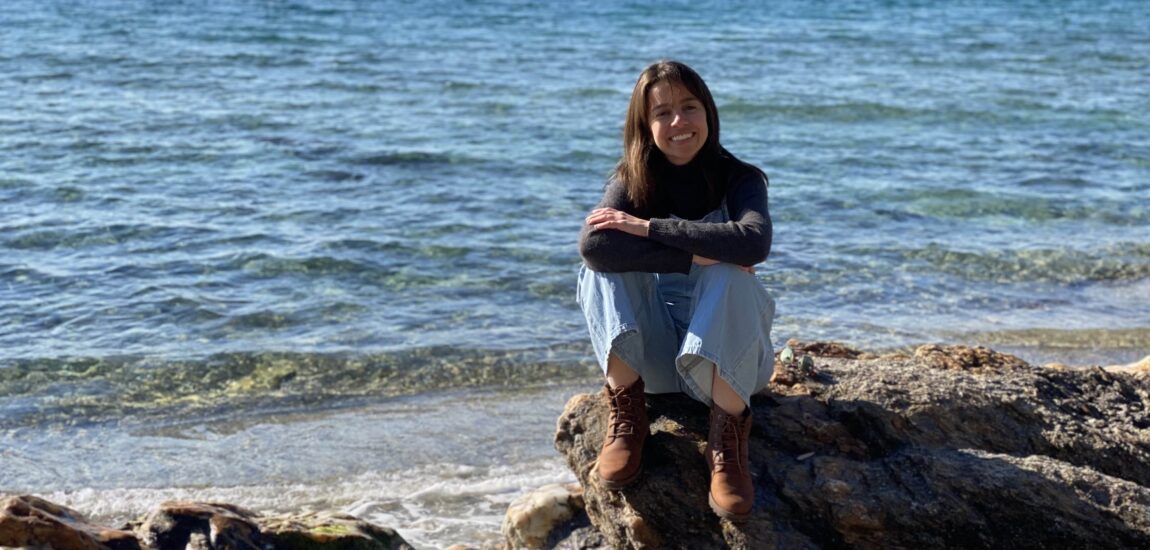
People’s Profiles – Mahyra Tedeschi
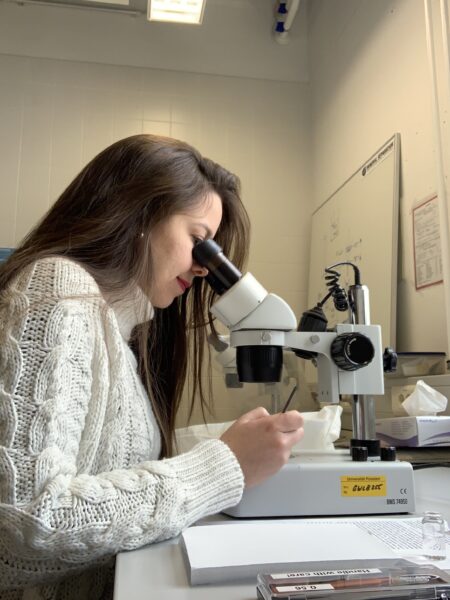
Mahyra Tedeschi is a Brazilian geologist living in Finland since November 2024, where she works as a senior scientist specialising in metamorphic petrology at the Geological Survey of Finland (GTK). Previously, she worked as a geoscience researcher at the Geological Survey of Brazil (SGB) and as an assistant professor at the Federal University of Minas Gerais (UFMG). Her research centres on petrochronology, which involves reconstructing the evolution of rocks over time, primarily due to changes in pressure and temperature (P-T-t trajectories); as well as petrology and geochemistry focused on understanding the processes that controls the budget and transport of elements in the crust. These investigations aim to contribute to our understanding of the evolution of the Earth over geological time.
Mahyra Tedeschi can be contacted by email here, or follow her on LinkedIn or Researchgate.
Also at the PETROCHRONICS group on the web, YouTube, Instagram @petrochronics and via email.
What field do you currently work in and what is the job title of your current position, in what country and city do you work?
I am a senior scientist at the Geological Survey of Finland (GTK) who specialises in metamorphic petrology. I live in Helsinki and work in Espoo, Finland.
Have you moved countries to pursue and build your career, networks, and credentials?
Yes, when I started working at the Geological Survey of Brazil while developing my PhD at the Federal University of Minas Gerais in Brazil, I realised how important it would be for my academic development to experience different scientific environments that would provide me a broader education. To this end, I undertook a one-year research internship at the University of Bern (funded by National Council for Scientific and Technological Development – CNPq). During this internship, I had the opportunity to conduct part of my PhD research at a leading centre for petrochronology and the chance to integrate into a highly engaged scientific community. This experience not only expanded my scientific background and skills, but also my cultural understanding, as I met and worked with people from a variety of ethnic and cultural backgrounds. Building on this, I undertook a short-term internship at the University of Potsdam working on nanorocks (funded by German Academic Exchange Service (DAAD), and later as a junior professorship at the University of Bern working in the Computational Petrology and Geochemistry group (funded by CAPES, FAPEMIG and SNSF). My studying and working experiences, in Brazil and abroad together with attending conferences and workshops, enabled me to grow professionally and build professional networks and friendships with people from all over the world – which I greatly appreciate.
I realize, however, that several conferences and internships I have undertaken were only possible because I worked at the Geological Survey of Brazil during my PhD and could afforded them, mostly, with my personal income, which is the reality for several students. To try to overcome this, I suggest to those students with less national funding possibilities that they look for opportunities to attend conferences as volunteers helping in the organization of the events and check for scholarships that societies and events/conferences/workshops may provide. Nonetheless, some countries provide scholarships for foreigners such as the DAAD or combined initiatives like the European Research Council (ERC) and the Brazilian National Council of State Funding Agencies (CONFAP), for instance.
What are the most enjoyable aspects of your job and what do you like most about your working environment?
My enthusiasm for learning and exploring has always been a driving force in my career, leading me towards a research environment. I relish the opportunity to learn new things, whether that’s investigating varied geological settings and rocks or learning analytical techniques. It is also a privilege to have the opportunity to work and collaborate with people from different fields and backgrounds from various countries.

If your work involves teaching and training others, what do you consider are the highlights?
I worked as an Assistant Professor, teaching courses to undergraduate and postgraduate students at the Federal University of Minas Gerais. I still supervise postgraduate students conducting research in petrochronology there. The teaching and learning process is fascinating, both in the classroom and through interactions with students, peers and professors throughout my working life. I agree with the idea that teaching is the best way to learn: it requires knowledge of the subject, the ability to convey this knowledge and the humility to admit when you don’t know the answer to a question. This process provides extra motivation to learn new things, offering a valuable opportunity to learn from individuals with diverse perspectives. In my opinion, the main role of professors and mentors is to impart knowledge with a strong emphasis on critical and scientific thinking and behaviour.
Does your job involve you undertaking field work? If yes, then please share it’s importance in your research.

Yes, the projects usually involve fieldwork aimed at understanding the geological context and collecting samples. In my opinion, it is important to connect observations at different scales and to properly control the sampled material. I believe that combining fieldwork and laboratory activities can lead to successful interpretations of geological processes and their geodynamic implications.
Have you ever experienced any health-related challenges—whether physical, mental, or chronic—that affected your work, and if so, how did you or your workplace navigate that?
I suffered from migraines for several years, but they gradually became more frequent and intense, to the point where I was experiencing more than five attacks per week. At a certain point, I learned to cope with the situation to some extent and managed to control the attacks. I thought this was my “normal life”. However, I did not realise how much this was affecting my quality of life and work performance. Last year, I was diagnosed with chronic migraine and started a treatment, which has successfully reduced the frequency of my migraines. Although migraines are one of the most common neurological disorders, it is still associated with stigmas due to societal misconceptions and dismissive attitudes. I tried several times to minimise the effects of crises and avoid telling others, afraid of being judged negatively, including in my working environment. Nowadays, I realise how important it is to pay attention to your body’s symptoms and take care of your health. This relies heavily on trying to lead a balanced life. I have also told my supervisors and colleagues about my condition, so that they can be more understanding and helpful during a crisis, and that has a positive impact on my work.
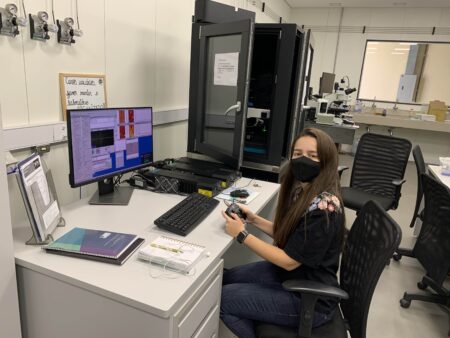
At this stage of your career, have you led any particular efforts in community building and/or contributed to DEI initiatives? Are there especially successful aspects of these efforts that you can highlight in this respect? Have there been elements of this work less successful than anticipated and that you have learned from?
In 2019, my colleague Marco Pinheiro and I founded the PETROCHRONICS group (Petrochronology + Geodynamics). This volunteer-run outreach initiative promotes scientific research, collaboration and dissemination. The group aims to encourage discussion and collaboration among people working in petrochronology and related fields, and to disseminate knowledge in these areas through social media posts, workshops and online talks. Prior to the pandemic, we noticed that cutting-edge science was mostly accessible only to those who attended conferences and had open access to publications, which can restrict several students and scientists. We created PETROCHRONICS aiming to help reduce these barriers.