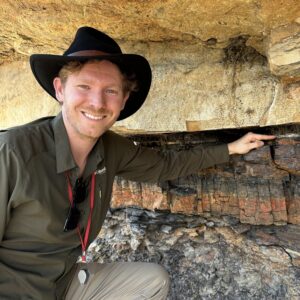
EAG Early Career Science Ambassador Pim Kaskes attends GSA Connects 2025 in San Antonio
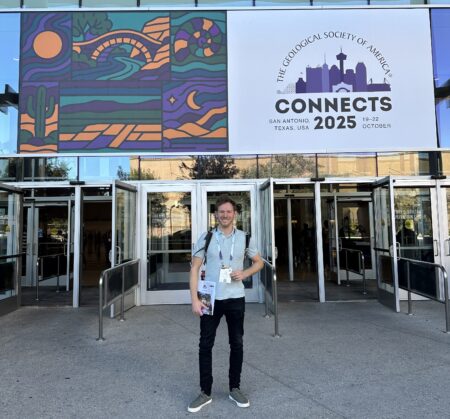
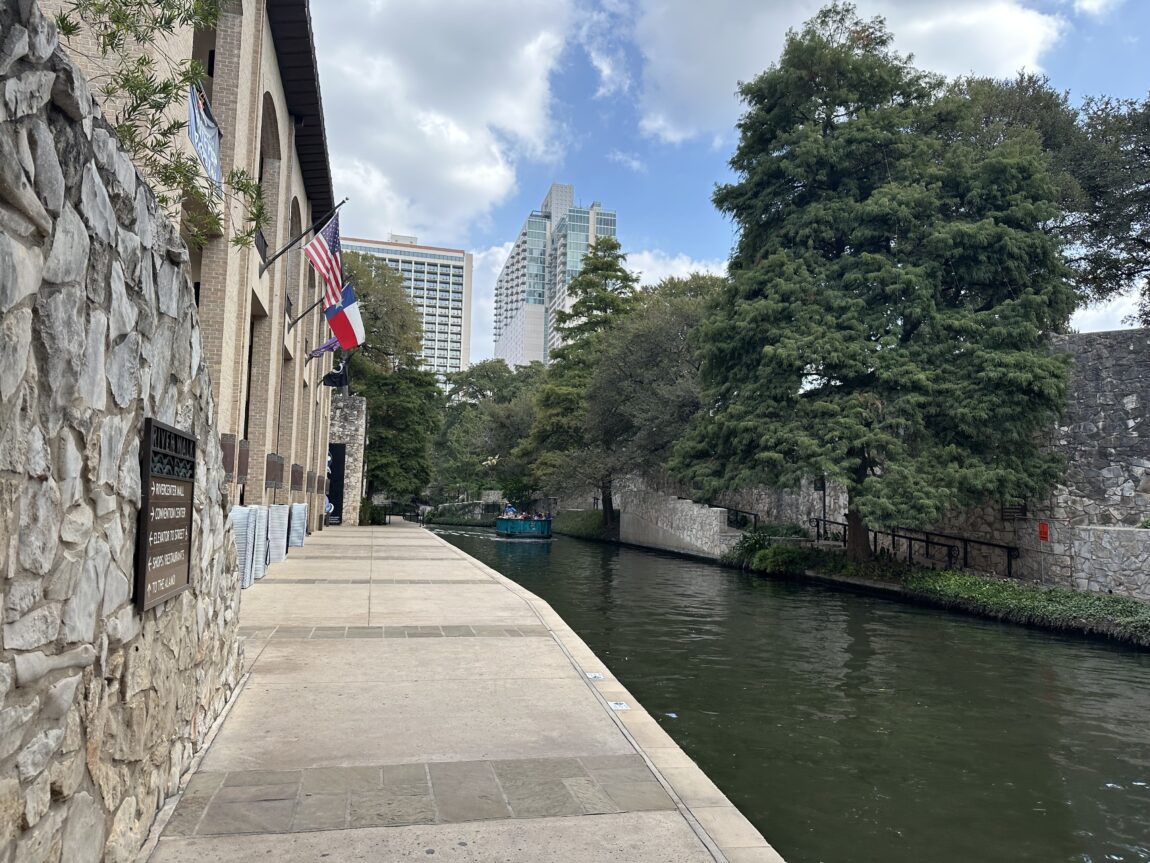
From tsunami sediments dating back to the end of the dinosaurs to the iconic riverwalk in San Antonio: from 17 – 23 October 2025 I visited Texas to attend the Geological Society of America (GSA) Annual Meeting 2025. A massive thanks to the European Association of Geochemistry (EAG) for granting me an Early Career Science Ambassadorship to be able to travel to the USA. The GSA meeting was very successful and was packed with exciting activities, such as a memorable fieldtrip, and three dedicated sessions close to my own research field of impact cratering.
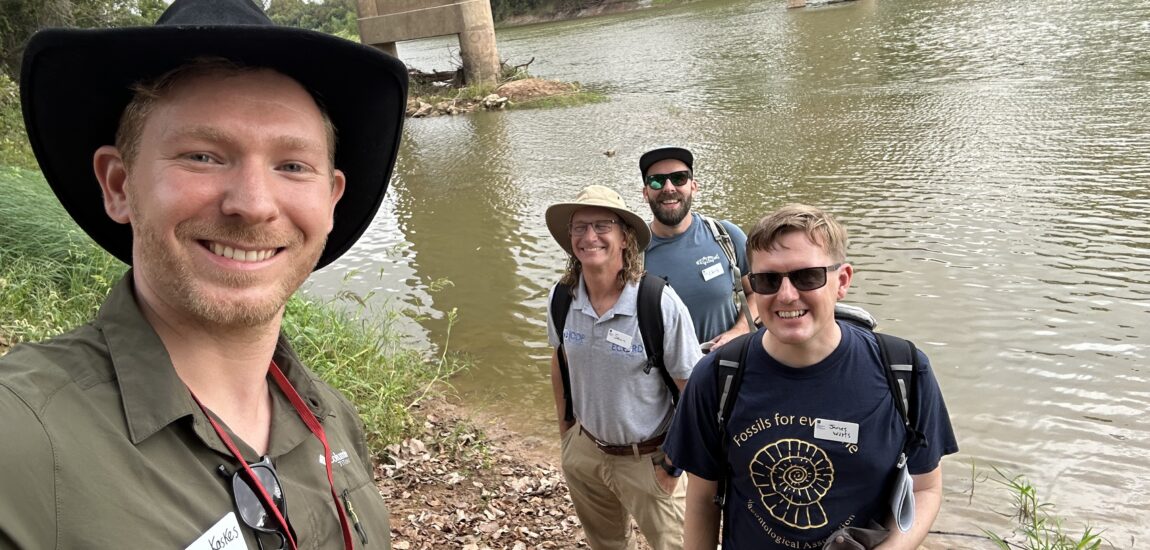
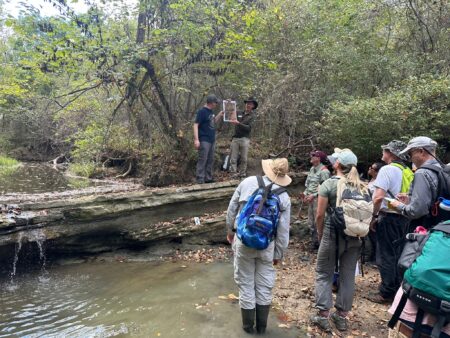
A personal highlight of the week was the pre-conference fieldtrip that I co-led together with Dr. Chris Lowery, Prof. Sean Gulick (both UT Austin, Texas), and Dr. James Witts (Natural History Museum London). With the GSA meeting being organized in San Antonio, it provided a unique opportunity to re-examine the historically important Cretaceous-Paleogene (K-Pg) boundary sections in Texas and around the Gulf of Mexico. After breakfast tacos we visited first the outcrops along the Brazos River in Falls County. These localities are renowned for the preservation of a uniquely expanded sequence of impact ejecta-bearing, high energy shallow marine sediments, interpreted to be linked to the arrival of gigantic, impact-generated tsunami waves. These deposits were first studied in detail in the late 1980s and eventually led geologists in the right direction 1200 km towards the south to discover the Chicxulub impact crater on the Yucatán Peninsula in Mexico in 1991: the smoking gun for the K-Pg mass extinction and the demise of the non-avian dinosaurs.
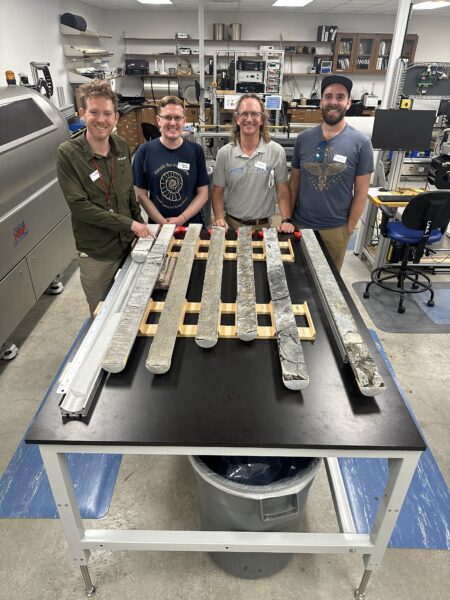
After a lovely lunch on a family ranch full of Texas longhorns, we moved to College Station to visit the Gulf Coast Core Repository, where many drill cores are stored from the International Ocean Discovery Program (IODP) and earlier drilling programs. This includes the IODP-ICDP Expedition 364 drill core that was collected in 2016 in the Gulf of Mexico within the Chicxulub impact crater. It was drilled into a ring of hills in the central zone called the peak ring and consisted of a thick succession of shocked granite, impact melt rock and suevite, the latter being a unique melt-bearing polymict breccia. I really enjoyed showing the excursion participants the key drill core sections and explaining my PhD research on the petrography, geochemistry and emplacement mechanisms of the suevite sequence. The suevite is overlain by fine-grained marine sediments that are characterized by a distinct peak in the concentrations of iridium and other platinum group elements. The discovery of this positive iridium anomaly within the Chicxulub crater makes it now possible to directly compare the succession of impact rocks within the crater with K-Pg boundary ejecta sites all around the globe, such as the outcrops along the Brazos River and other exposures and drill cores in the Gulf of Mexico region, opening a wide range of exciting research avenues to be explored in the near future. For more information on this excursion, I refer to this paper that we wrote as a field guide: https://doi.org/10.1130/2025.0074(02).
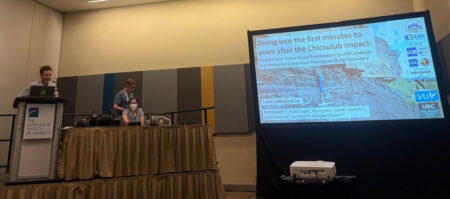
Besides the fieldtrip, I had the honor of convening for the third year an interdisciplinary session centering around the K-Pg boundary interval: “From Large-scale Geological Events to Mass Extinction Mechanisms”. This session, which I convened this time together with Dr. James Witts (Natural History Museum London, UK) and Dr. Courtney Sprain (University of Florida, USA) brought together a wide group of geoscientists, including stratigraphers, geochronologists, paleontologists, geochemists, volcanologists, and modelers, to share their latest research findings. The discussions focused on the Chicxulub impact event, Deccan Traps volcanism, and their role in the extreme environmental and biological changes that occurred ~66 million years ago. These topics all aligned perfectly with my postdoctoral project at the Vrije Universiteit Brussel. I presented at GSA our recent chemostratigraphic work on ejecta-bearing terrestrial K-Pg boundaries in which we used micro-X-ray fluorescence to capture in high detail the direct aftermath of the Chicxulub impact event on land. I am grateful to the EAG for offering me this opportunity to go to GSA to catch up with familiar faces in the convention center and along the Riverwalk in San Antonio and to start exciting future collaborations with new colleagues around the world working on the K-Pg catastrophe.
About the Author