Building the Hard Rocky Planets Summer School Report by EAG Sponsored Student Vaishvi Tyagi
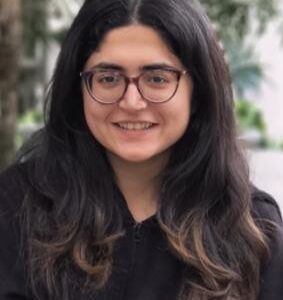
My name is Vaishvi Tyagi, and I am a PhD student in the Experimental Petrology group at the Department of Earth Sciences, University of Oxford. The intersection of planetary science and experimental geochemistry greatly fascinates me, and I relish the opportunity to delve deeper into the thermo-chemical evolution and deep-to-shallow-mantle processes that occur within the terrestrial system bodies.
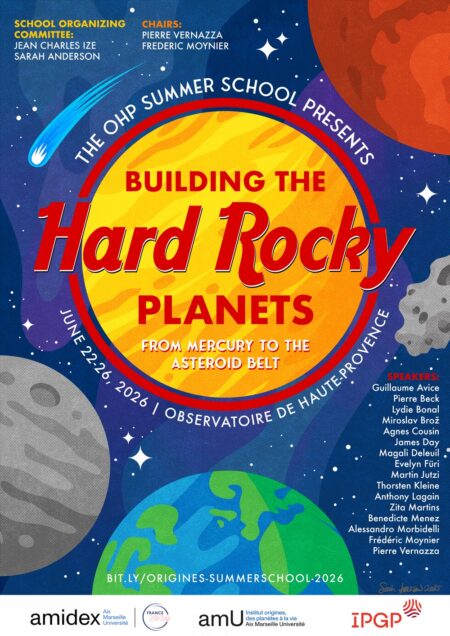
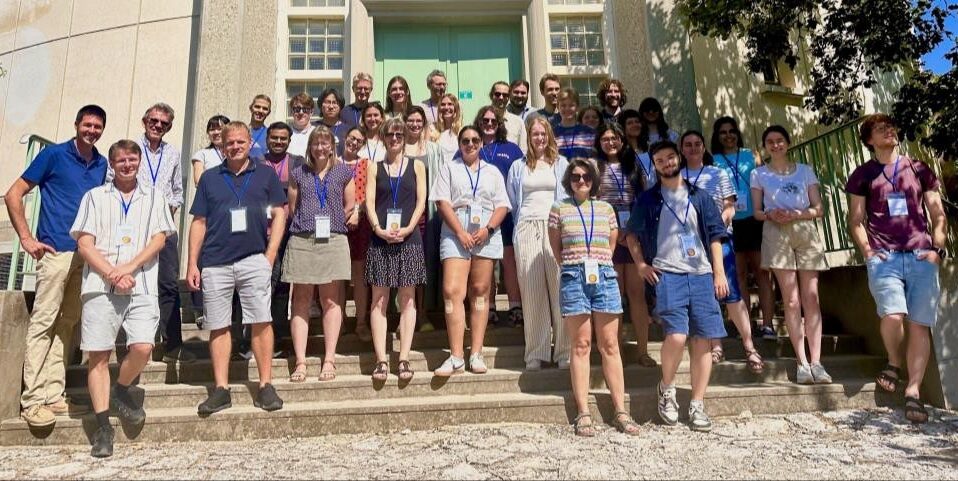
In June 2026, as an EAG sponsored student I participated in my first summer school as a (then first year) PhD student and I would like to begin by saying that the experience was nothing short of amazing. This unique summer school, titled “Building the Hard Rocky Planets- from Mercury to the Asteroid Belt”, was co-organized by the Origins Institute at Aix-Marseille University and the Origins theme of the Institut de Physique du Globe de Paris (IPGP). It was hosted at the Observatoire de Haute-Provence, an astronomical observatory in the southeast of France. This interdisciplinary program was aimed at understanding the formation and evolution of the inner solar system and terrestrial planets through cosmochemistry, planetary dynamics, disk processes, impacts, and surface composition. The four-day schedule covered an impressive range of topics. It started with discussions on the terrestrial planets and asteroid belt, followed by the formation of inner solar system and the origin of volatiles. The concluding sessions explored organic matter and the origin of life, as well as exoplanets and their relevance to planetary systems. Each session featured multiple speakers with a wide range of expertise about the telluric planets.
The summer school was particularly valuable to me because it provided me with a greater understanding of Mars’ early history, as well as the mantle-crust processes that have shaped the planet over time, topics that are closely connected to my specific research interests. Undoubtedly, learning more about Mars was extremely helpful for my academic growth and refining my current project. Beyond Mars, I also benefitted from the program through its perspectives on other terrestrial planets and their formation, volatiles and exoplanets that broadened my current understanding and highlighted the importance of comparative planetology. These perspectives have opened new avenues for me that I can explore throughout my PhD and beyond. Moreover, this opportunity allowed me to engage with distinguished scientists across the field and learn directly from their expertise.
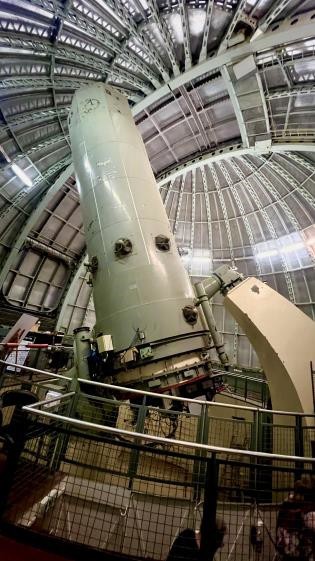
However, the most interesting part of the summer school was visiting the 193 cm telescope (T193), famous for its role in the 2019 Nobel Prize in Physics for discovering the first confirmed exoplanet 51 Pegasi b, in the year 1995. It was fascinating to learn about the telescope’s working principles, especially as someone who has never explored an astronomical observatory before. We were also introduced to the observatory’s 80 cm and 120 cm telescopes and had the opportunity to operate them. The experience was particularly memorable and provided a refreshing practical dimension.
Overall, attending this summer school was much more than just an opportunity to learn about planetary science. It provided me with great conversations with researchers and fellow students, developed my understanding of how interconnected areas of our field are, and helped to see my work in a much broader context of planetary formation and evolution. For these very reasons, I would strongly encourage other PhD students, especially those at the beginning of their doctoral journeys, to take advantage of such opportunities and get involved. They offer something that is difficult to gain from research alone. For me, the summer school turned out to be a genuinely formative part of my PhD journey, and one that I will remember for a long time. I would like to extend my deepest gratitude to EAG for providing me with the student sponsorship award that made it possible for me to attend this program. I hope to stay connected with the association and actively engage in more future endeavours.
About the Author